Birding Adventures in Jamaica: Discover Unique Endemics
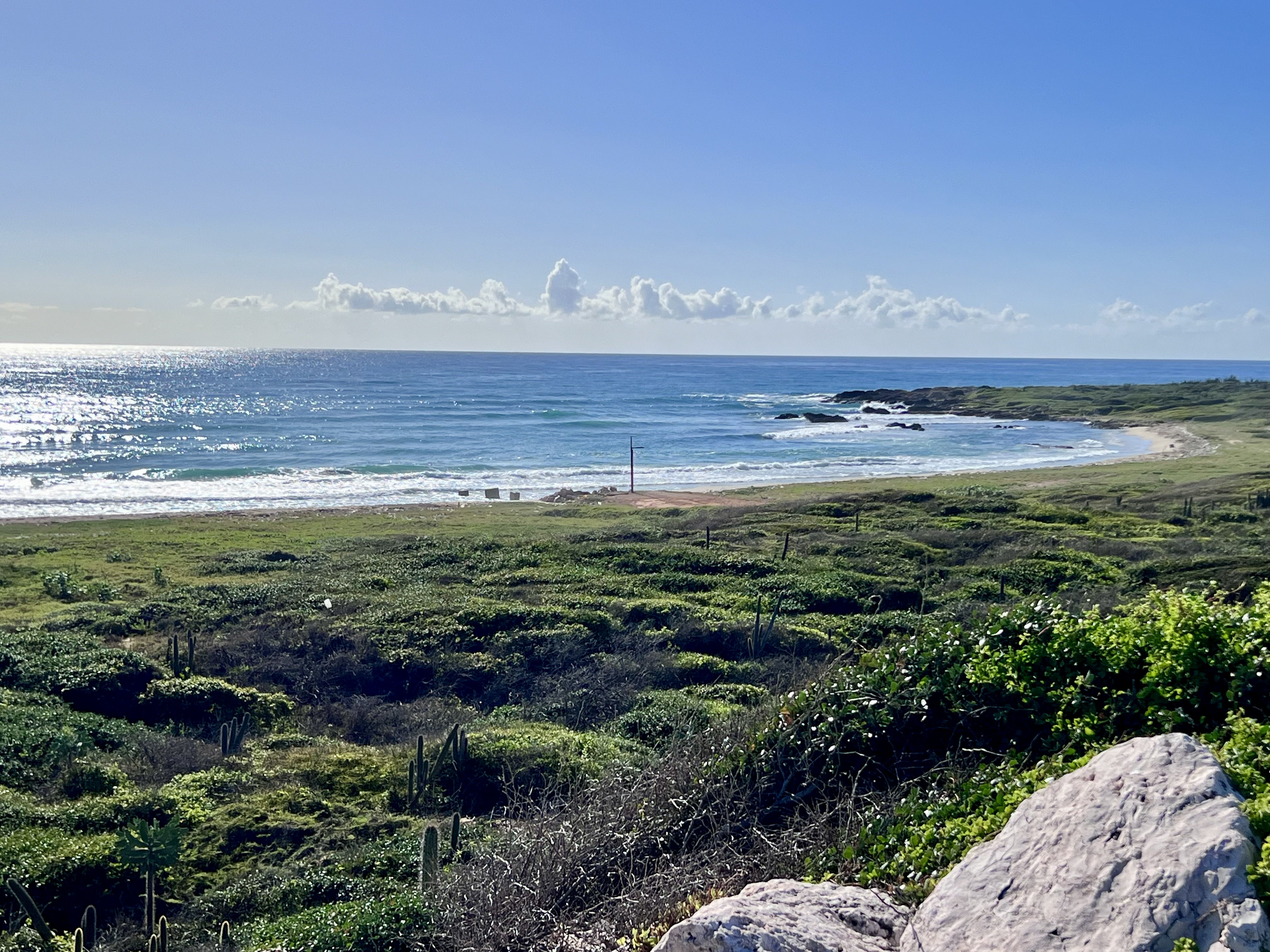
When I told people we were traveling to Jamaica, nearly everyone asked which of the all-inclusive resorts we were staying. They probably thought we’d be lounging around pools or draped on chaises in front of the Caribbean Sea. But that’s not why we were there. We wouldn’t be anywhere close to Montego Bay, where cruise ships stop and sunbathers crowd the beaches. No one asked if we would be birding.
We visited Jamaica in December last year on a trip organized through Houston Audubon and Tropical Birding. The island hadn’t been on our birding trips bucket list, per se, though it piqued our interests with its impressive 28 endemic bird species. My years in Corporate America have wired me to always look at the ROI (return on investment) and Jamaica certainly offered a lot in giving you so much in return in such a short time. You don’t tick off a long list of birds, but you’ll certainly get a lot of birds that you won’t find anywhere else in the world.
And just like that, Jamaica appeared on our bucket list.
We flew into Kingston, Jamaica’s capital, on the opposite end of the island from where most tourists gather. We were a group of eight: Our local guide, Lyndon Johnson (yes, named after the US president), our tour guide, Sam Woods from Tropical Birding, four others who are volunteers with Houston Audubon, and Steve and me. The trip was a short one–only 6 days (really only 5 for birding), and we didn’t waste time.
Hellshire Hills
Our first morning Lyndon took us to the thornscrub-laden Hillshire Hills, just outside of Kingston. Cactus that reminded me of Arizona’s Saguaro stood erect amongst the thorny vegetation. It took us a bit to find the Bahama Mockingbird, but it finally made an appearance and gave us great views. While patiently waiting for the mockingbird, we spotted our first endemic: Jamaican Mango and the Stolid Flycatcher posed nicely for us. “We call it ‘Tom Fool,’ Lyndon told me. “It perches on low branches, and easy for someone to grab. It’s a Tom Fool. Like Tomfoolery.” This is where I learned that Jamaicans have clever nicknames for many of their birds.


Caymanas Forest
It was still morning, but it was already hot, so off to the the forest to find other birds and some shade. We piled into our van and headed to Caymanas Forest reserve where the lush, leafy trees provided much-needed shade, leading us to another endemic, the Sad Flycatcher called “Little Tom Fool.” Smaller than the Stolid Flycatcher, but just as foolish, hanging out on easy-to-reach branches for someone to grab.
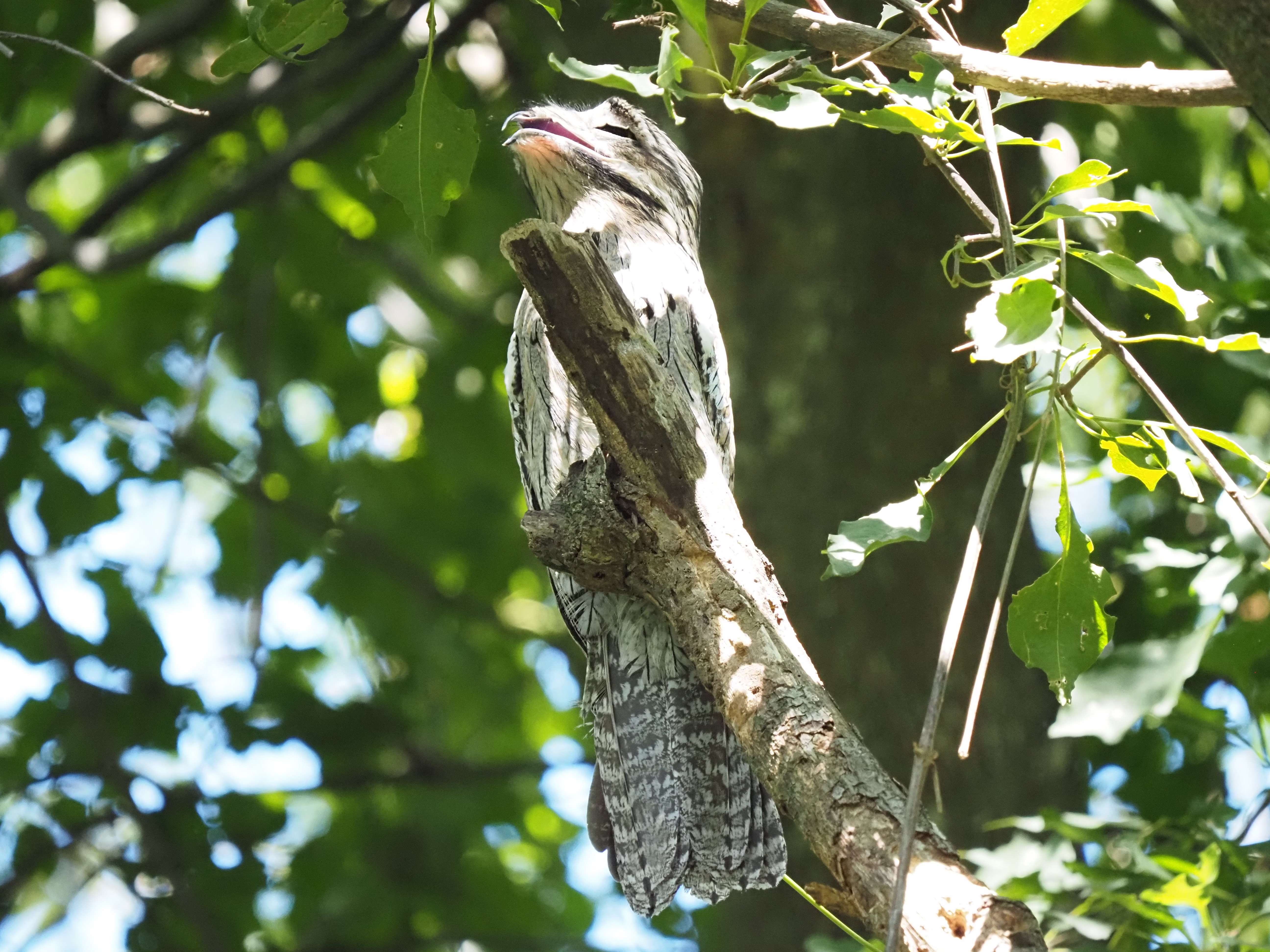
And without any effort at all, we easily found not one, but two sleeping Northern Potoos within mere minutes of each other.
Hope Gardens
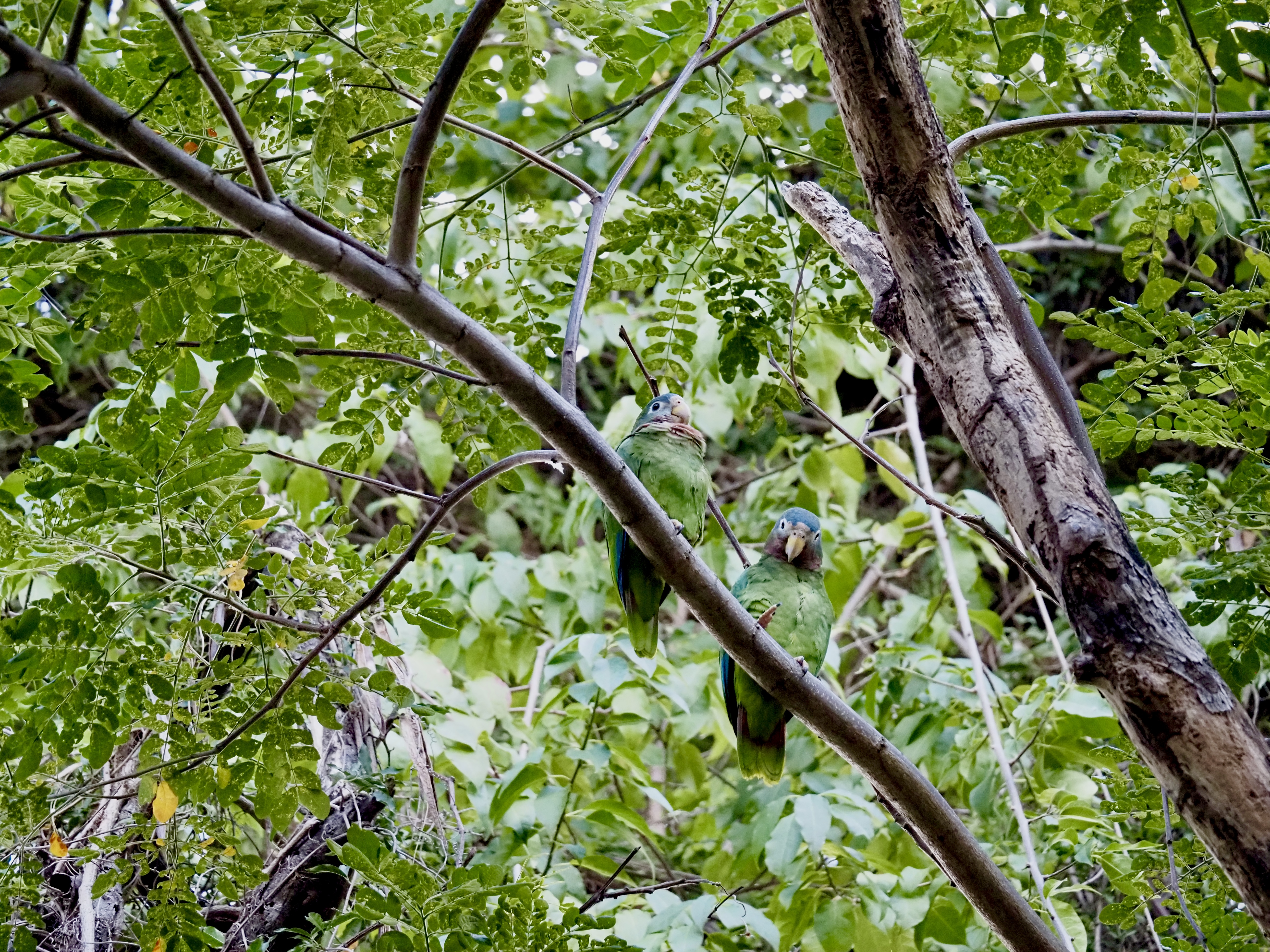
The 237-acre Hope Gardens (comprising of both the Botanic Gardens and Hope Zoo) is a sprawling lush oasis that takes you out of the cacophony of Kingston’s street noise. We were greeted by a pair of Yellow-billed Parrots as curious about us as we were of them. We made our way to to the open lawn area, passing by picnickers and a white gazebo with a young women sitting in a circle. In between them gift bags of different colors sat next to them with tissue paper peeked out the top while they nibbled on a light lunch they brought in. They looked like they might be celebrating a birthday.
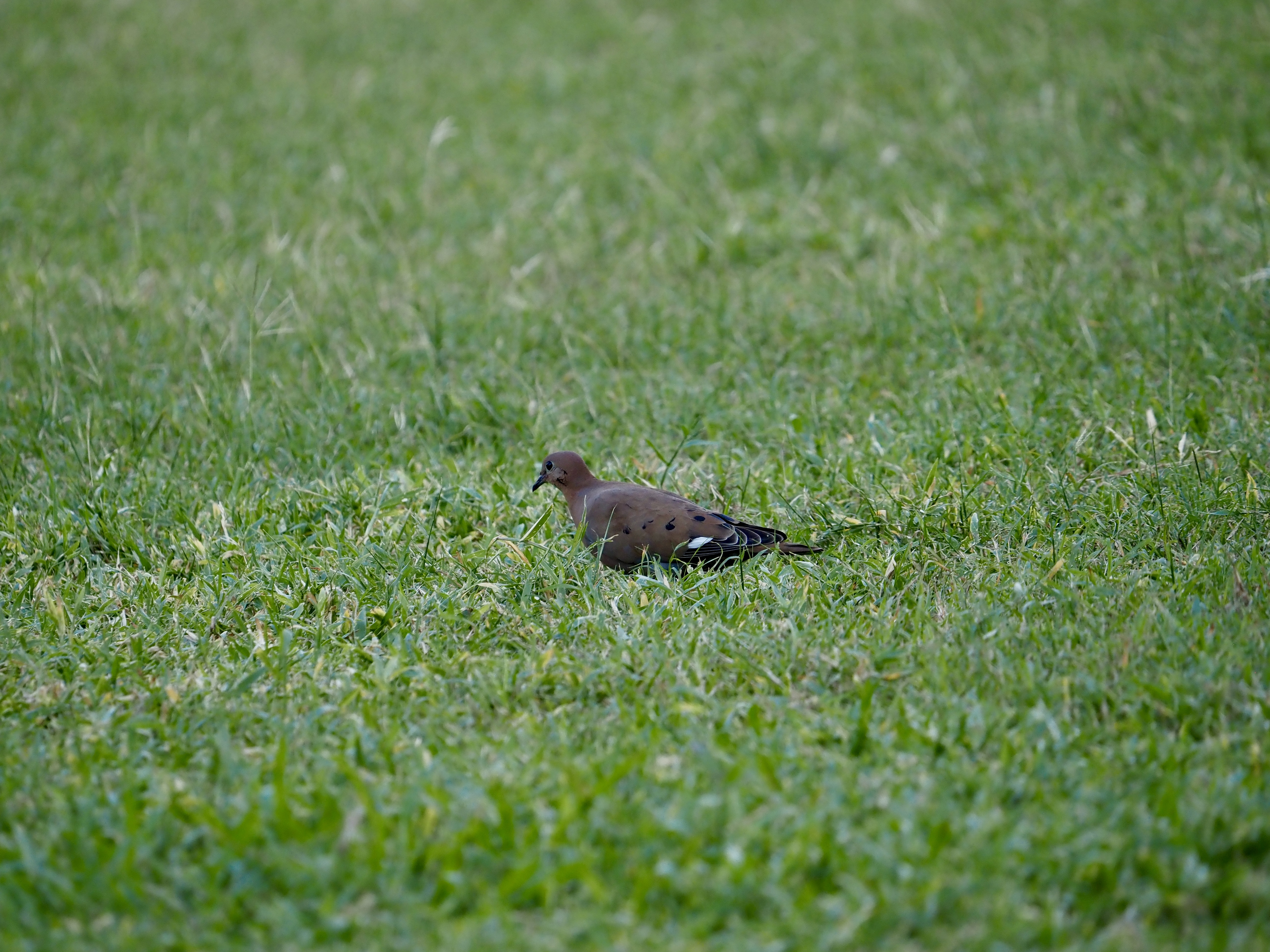
Zenaida doves fed on the immaculate lawn and we soon fixated on a large broad-leafed deciduous tree where a mixed flock of songbirds flitted around including Palm, Yellow-rumped, Prairie and Black-throated Blue Warblers, along with American Redstarts and Northern Parulas. Benches and a nearby washroom was handy.
Blue Mountains National Park
By afternoon we headed to the mountains. Though I had known we were going to be heading to the Blue Mountains National Park, I forgot there’d be a drive. I closed my eyes, gripped the seat’s arm rest, and trusted our driver was as concerned about his own life as I was mine. After a three-hour drive, we arrived at our basecamp—a lodge at 3500 feet—where we’d be for the next five days. This was the heart of coffee country in Jamaica. Trees full of red beans lined the cliffs next to the road, mixed in with over 100 species of montane forest trees.
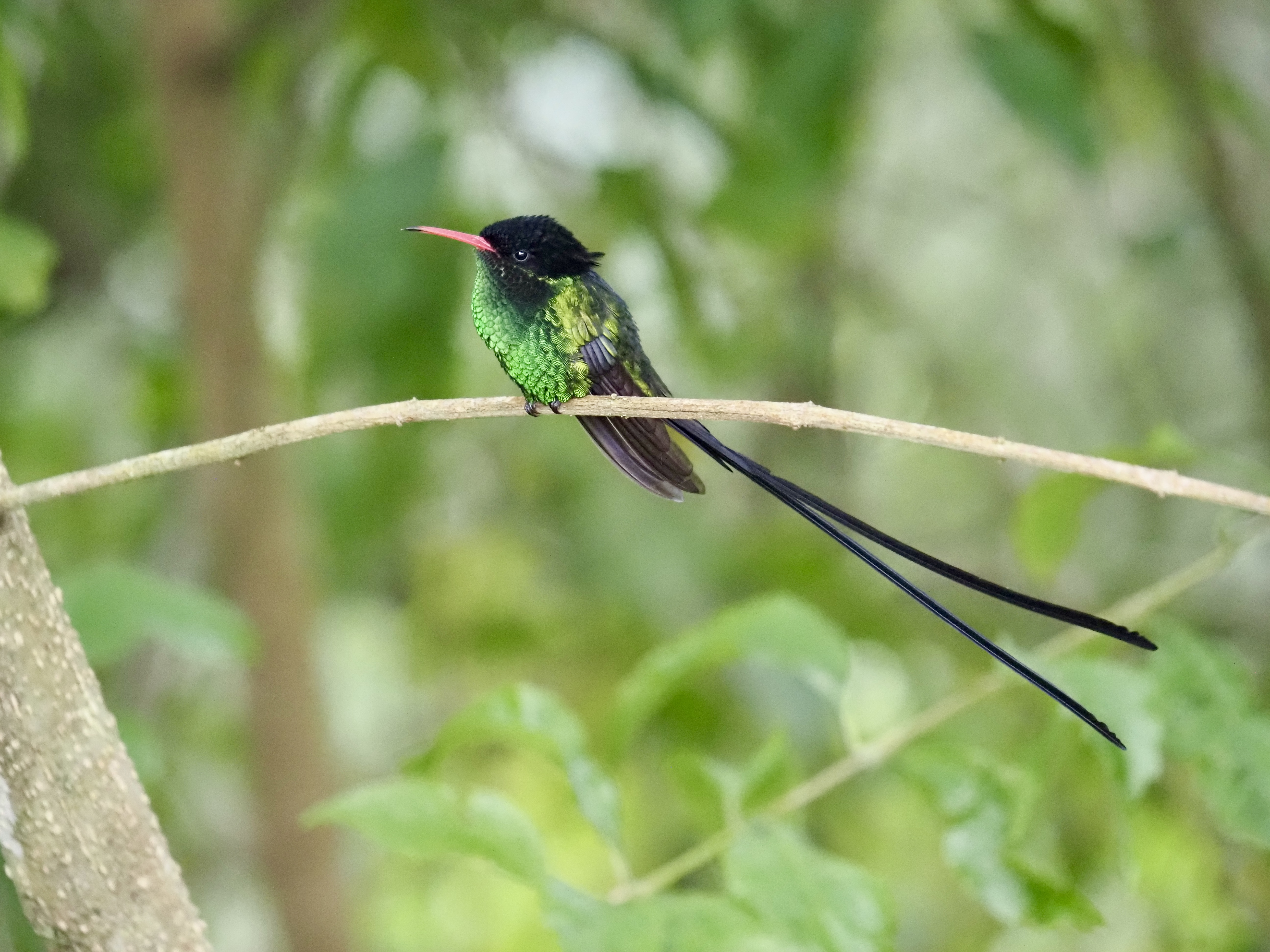
We stayed at a mountain chalet where clouds and fog surrounded us each morning. The gardens around our chalet brought in the Red-billed Streamertail, which is Jamaica’s national bird and a real charmer. The hummingbird is so accustomed to humans that it was never spooked by me as I sat on the porch near at the feeder, or even 4 feet away from its favorite perching branch.
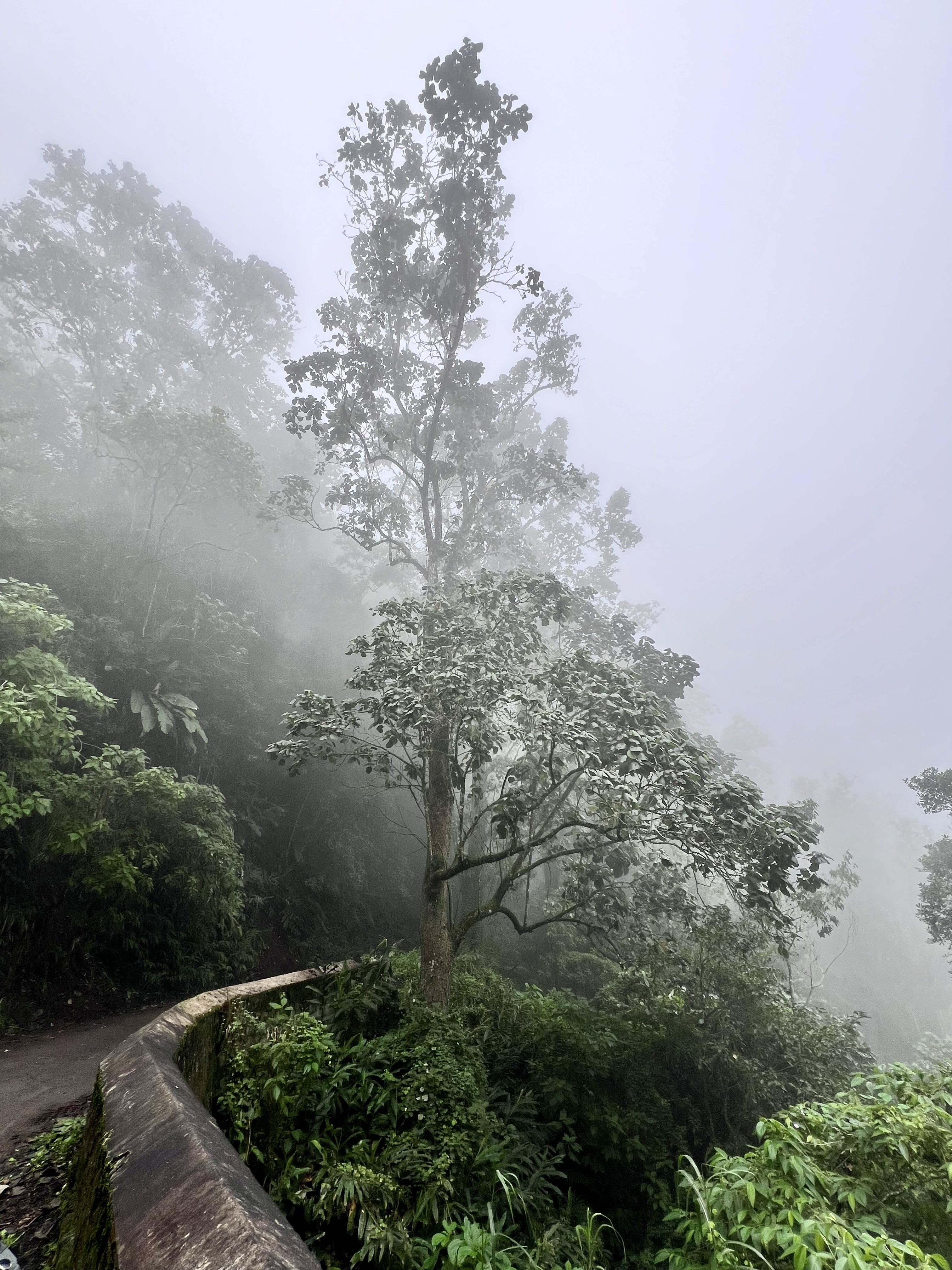
Over the next five days our group headed out early for morning walks just as the sun was rising, though I stayed back. They were looking for the chestnut-bellied Cuckoo, which they found. I slept in because I was having trouble walking on this trip. It seems that with each trip, the inflammation that accompanies scleroderma (an autoimmune disease) plagues my ability to walk.
The Loggerhead Kingbird became my alarm clock each morning with its chirp-chirp-chirp rattle. One morning I went out on the veranda to look for the bird, but thick fog engulfed the mountain and I couldn’t see my avian wake-up call. I sat on the veranda in my pajamas, slippers, and my polar fleece jacket and waited for the curtain of fog to unveil the bird, hopping up and down on a branch in a tree near my veranda. I sat and watched it wondering if maybe I should have gone off with the group to look for the cuckoo. After about five minutes of questioning my choice I landed on “I’m okay with not seeing every bird.” And then I found my bottle of anti-inflammatory pills and took a couple so I’d be in better shape when the group came back.
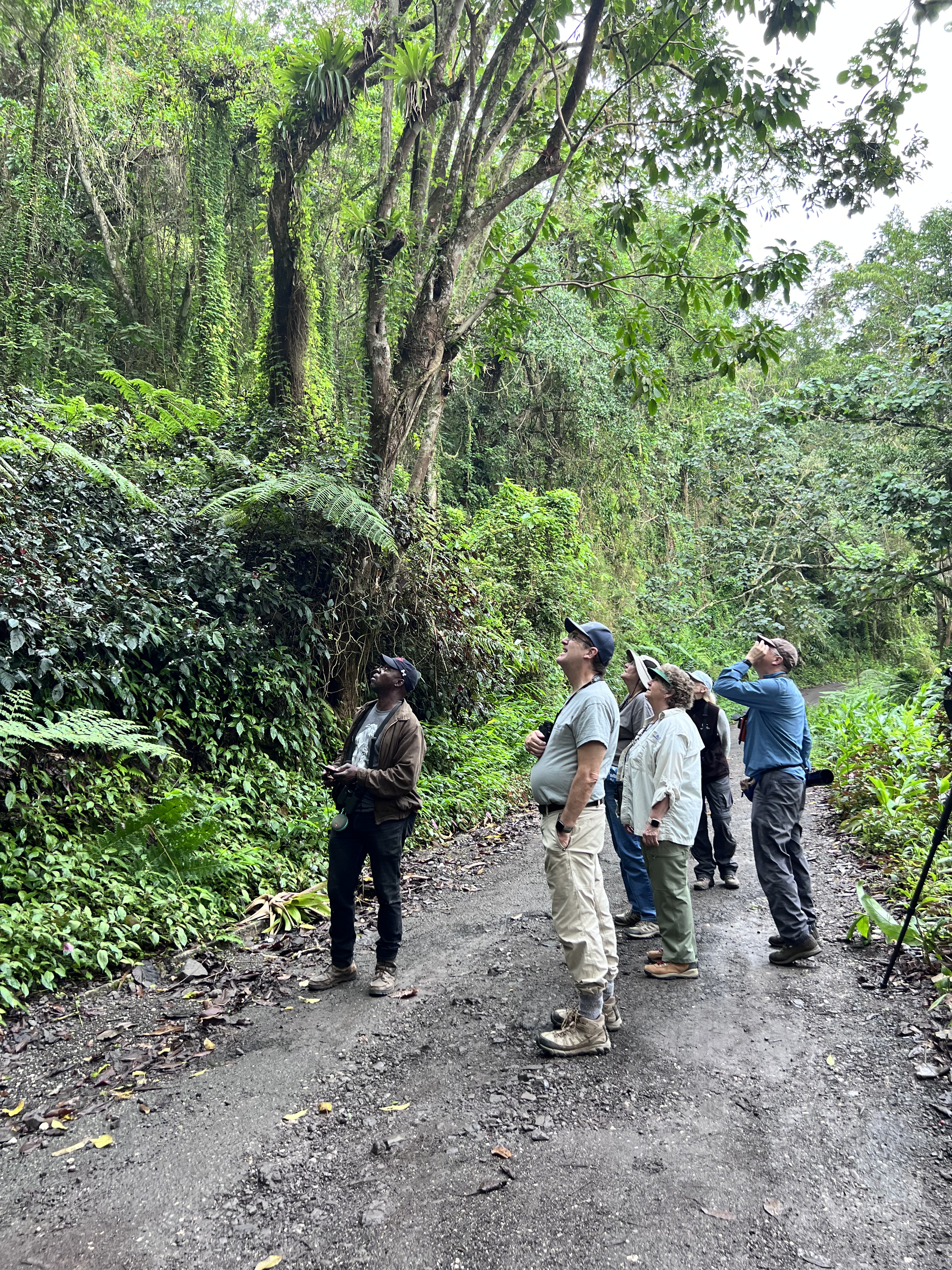
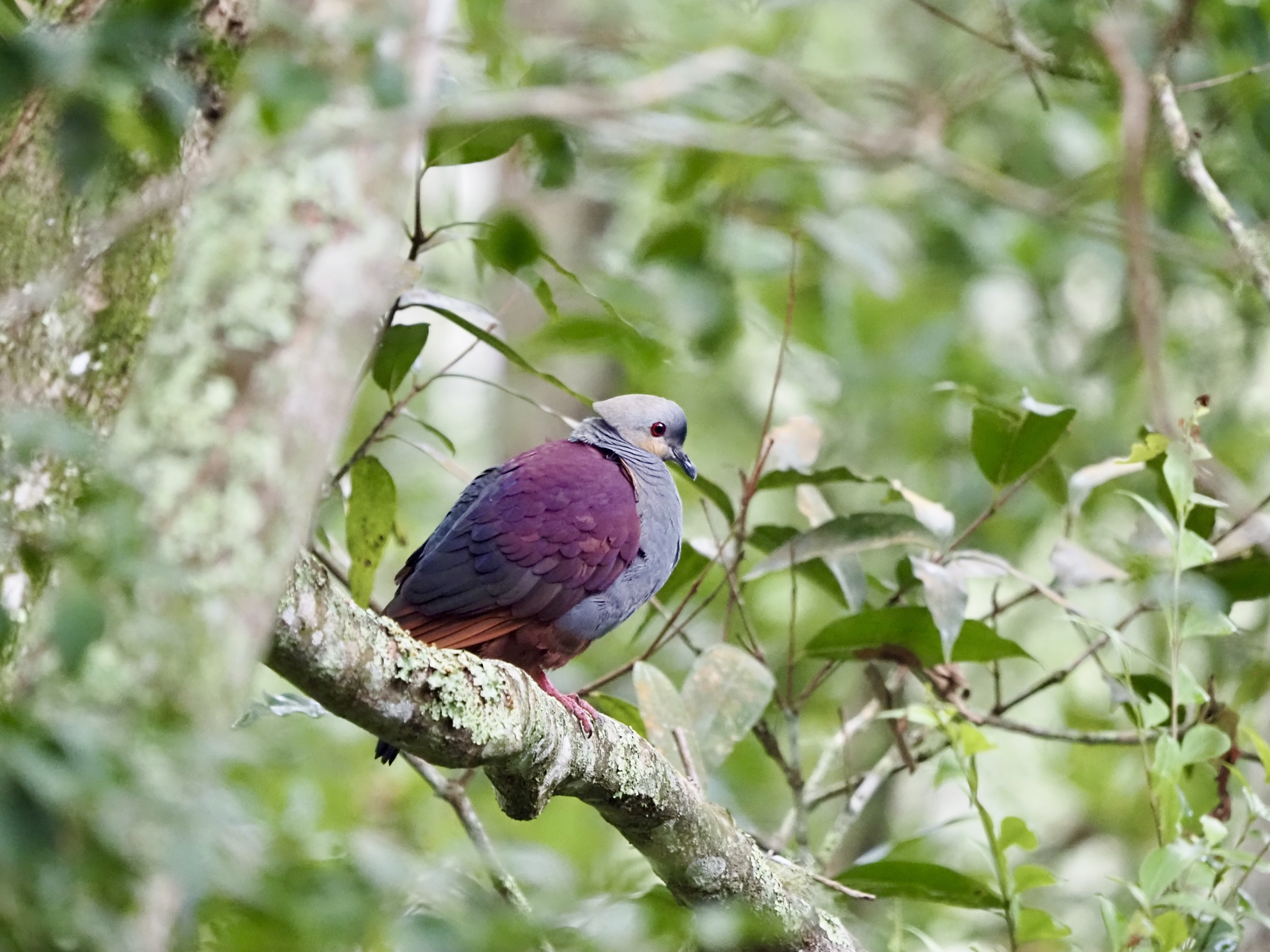
The bird we were most keen to find was the Crested Quail-Dove or “Mountain Witch.” This bird skulks around the trees, rarely making an appearance. After multiple failed attempts, Lyndon took us down a hill on a gravel road where our group finally got eyes on the bird, perched unafraid on a tree branch in a cluster of leaves, but in full view.
A trip to Jamaica hadn’t been on our radar. I had succumbed to a Facebook post that announced the trip and twisted Steve’s arm to consider it. It was only a week-long trip and Jamaica was easy to get to, plus all those endemics were enticing. The jerk chicken and fish were spicy and delicious and, as always, spending time with a local educated me more about the county, its people and customs–especially around the nicknames they gave their birds. Understanding those nicknames and where they come from add an interesting layer to birding and the locals connection to them.
We highly recommend putting Jamaica on your birding trip list. Or if you are a person who likes to visit Jamaica’s Montego Bay beaches, pack a pair of binoculars and take an excursion to the lush Blue Mountains and see what birds you find and you’ll also find out a little more about this little island in the Caribbean.
“This curious world we inhabit is more wonderful than convenient;
more beautiful than it is useful;
it is more to be admired and enjoyed than used."
Henry David Thoreau
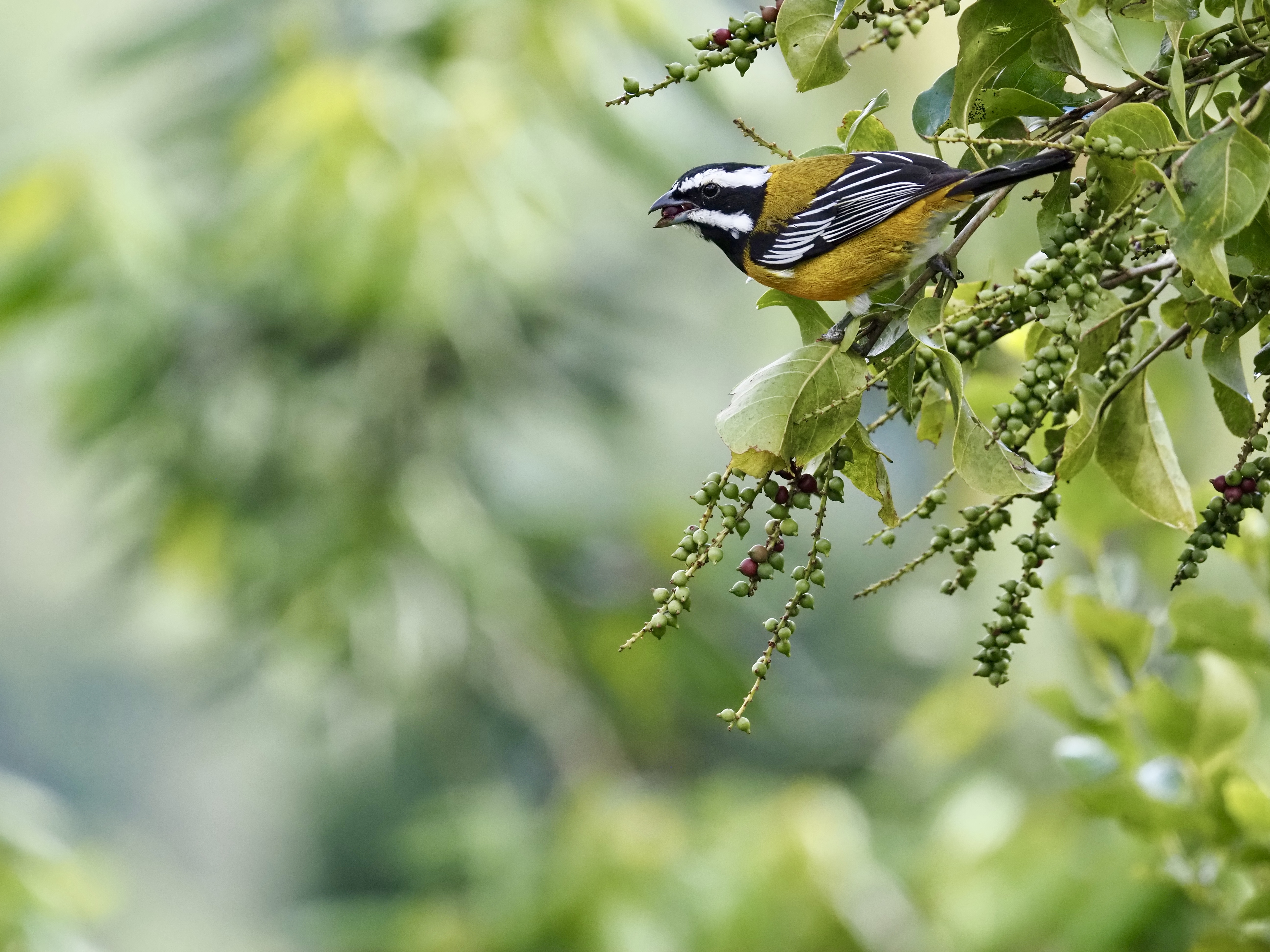
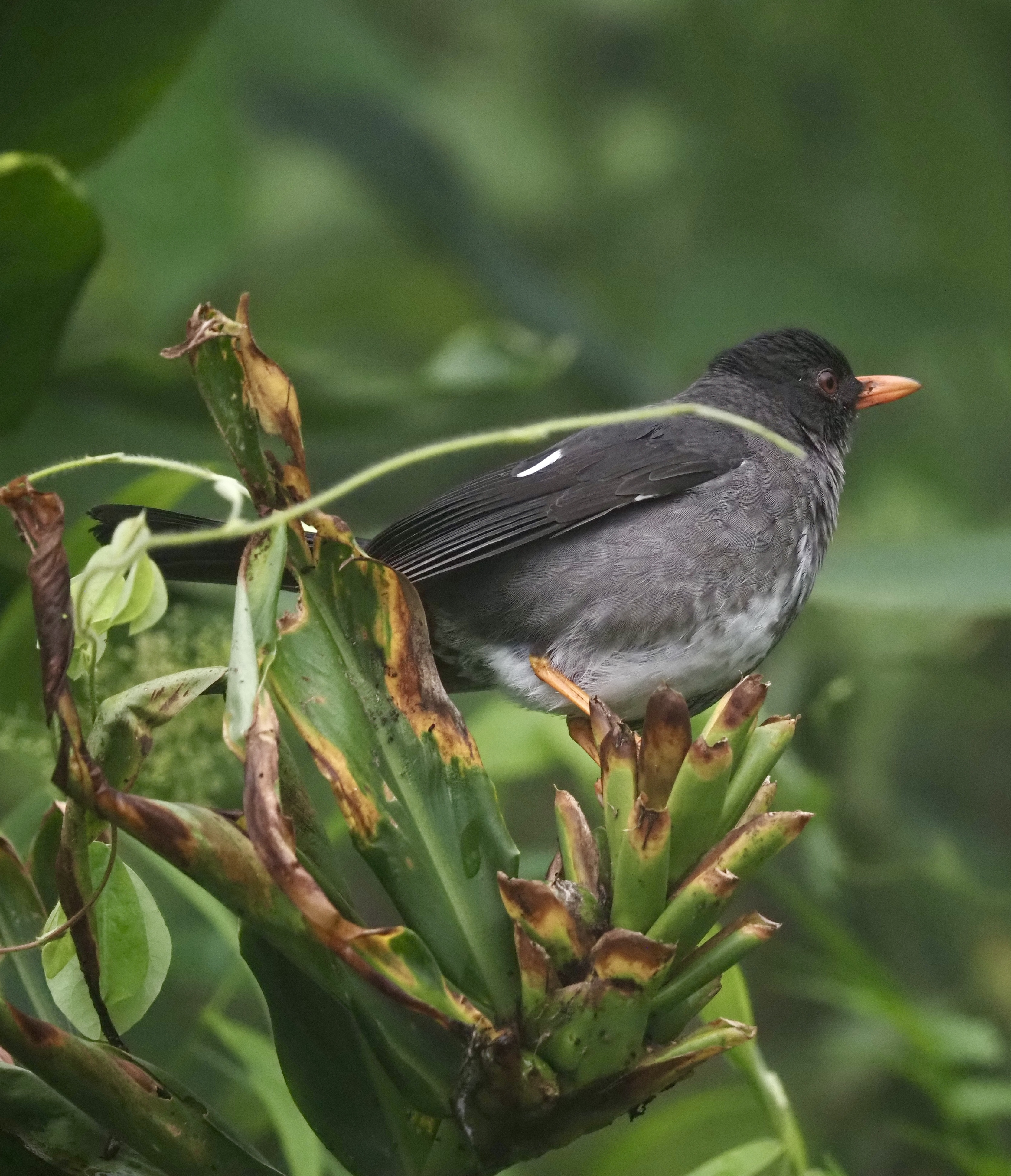
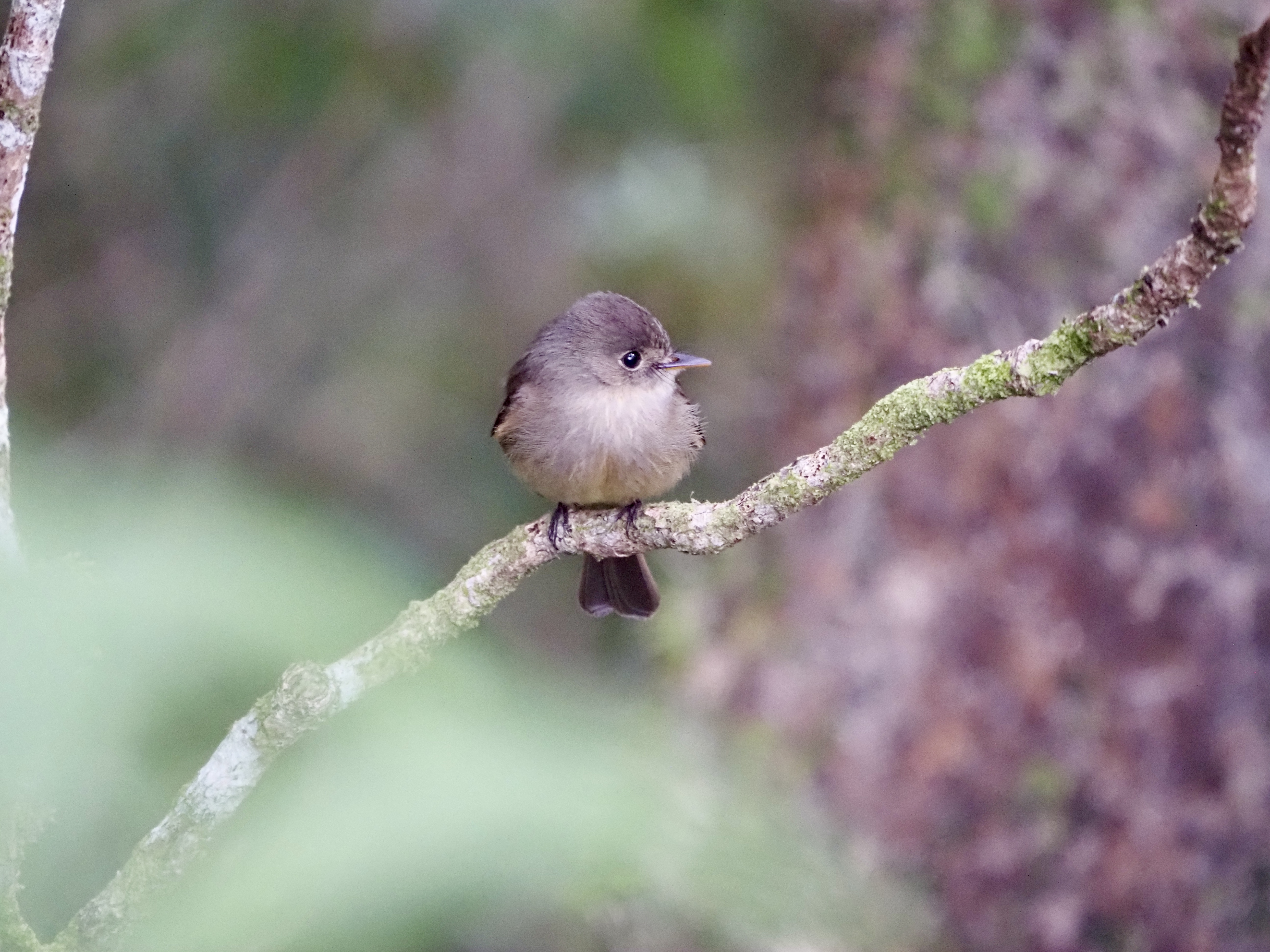
Birds we saw on this trip. (The Jamaican endemics are bold.)
- Rock Pigeon
- White-crowned Pigeon (“Bald Pate”)
- Ring-tailed Pigeon (“Ring-tail”)
- Common Ground Dove
- Crested Quail-Dove (“Mountain Witch”)
- Caribbean Dove
- White-winged Dove
- Zenaida Dove (“Pea Dove”)
- Mourning Dove
- Smooth-billed Ani (“Savannah Blackbird”)
- Mangrove Cuckoo
- Chestnut-bellied Cuckoo (“Old Man Bird”)
- Jamaican Lizard-Cuckoo (“Old Woman Bird”)
- Northern Potoo
- White-collared Swift
- Antillean Palm Swift
- Jamaican Mango
- Red-billed Streamertail (“Doctor Bird”)
- Black-billed Streamertail
- Common Gallinule
- Black-necked Stilt
- Spotted Sandpiper
- Ruddy Turnstone
- Laughing Gull
- Sandwich Tern
- Royal Tern
- Magnificent Frigatebird
- Brown Pelican (“Old joe”)
- Least Bittern
- Little Blue Heron
- Tricolored Heron
- Snowy Egret
- Green Heron
- Western Cattle
- Great Egret
- Great Blue Heron
- Glossy Ibis
- Turkey Vulture (“John Crow”)
- Osprey
- Red-tailed Hawk
- Jamaican Owl (“Brown Owl”)
- Jamaican Tody (“Robin Redbreast”)
- Belted Kingfisher
- Jamaican Woodpecker
- American Kestrel
- Black-billed Parrot Amazon
- Yellow-billed Parrot Amazon
- Green-rumped Parrotlet
- Olive-throated Parakeet
- Jamaican Becard
- Jamaican Elaenia
- Greater Antillean Elaenia
- Jamaican Pewee (“Willie Pee”)
- Sad Flycatcher (“Little Tom Fool”)
- Rufous-tailed Flycatcher (“Big Tom Fool”)
- Stolid Flycatcher (“Tom Fool”)
- Gray Kingbird
- Loggerhead Kingbird
- Blue Mountain Vireo
- Jamaican Vireo
- Jamaican Crow (“Jabbering Crow”)
- Bahama Mockingbird
- Northern Mockingbird
- Rufous-throated Solitaire
- White-eyed Thrush (“Glass Eye”)
- White-chinned Thrush (“Hopping Dick”)
- Yellow-crowned Bishop
- Jamaican Euphonia
- Jamaican Spindalis
- Jamaican Oriole (“Auntie Katie”)
- Jamaican Blackbird (“Wild Pine Sargeant”)
- Great-tailed Grackle
- Greater Antillean Grackle (“Kling Kling”)
- Ovenbird
- Black-and-white Warbler
- Common Yellowthroat (heard only)
- Arrowhead Warbler
- American Redstart
- Cape May Warbler
- Northern Parula
- Yellow Warbler
- Black-throated Blue Warbler
- Palm Warbler
- Yellow-rumped Warbler
- Yellow-throated Warbler
- Prairie Warbler
- Black-throated Green Warbler
- Bananaquit
- Yellow-faced Grassquit
- Orangequit
- Greater Antillean Bullfinch
- Yellow-shouldered Grassquit
- Black-faced Grassquit

